


The NAMM Show 2018 kicks off this week, the preeminent music and technology trade show, the most important of its kind, and the one everyone wants to be at. For this reason, Microfusa is traveling to Anaheim to tell you firsthand about the most relevant news from this fantastic event.
The NAMM convention, held every year in Anaheim, California, United States, is considered the most important trade show worldwide for musical products, technology, and professional audio.
-
A little history
-
Today
-
Highlights of NAMM 2018
Korg
To start this review of the most interesting products being presented at this edition of NAMM, we are going to focus on Korg. The renowned Japanese company of electronic musical instruments and professional audio equipment has outdone itself and released a wide range of new products to the market, including synthesizers, digital pianos, a portable PA system, metronomes, among others. Korg Prologue 16 and Prologue 8 are two new polyphonic analog synthesizers with advanced architecture. The Prologue range is fully programmable, allowing you to create complex layers of sounds, making the products in this series one of the most customizable hardware synthesizers on the market.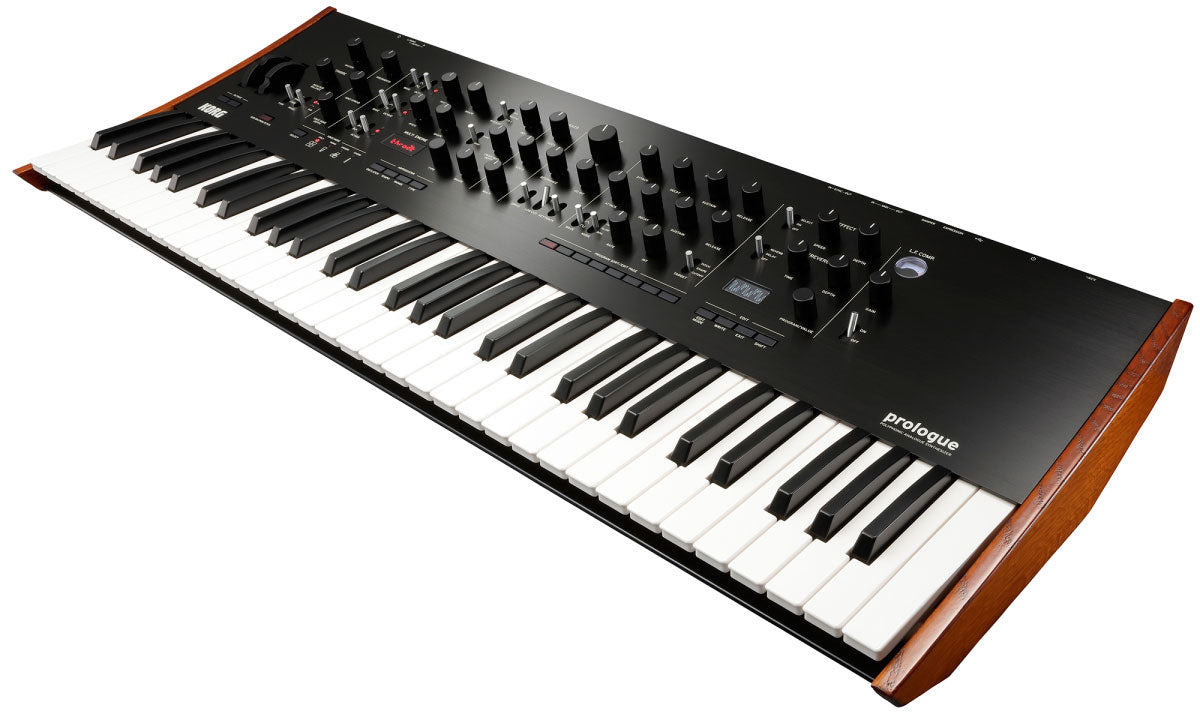
The Prologue series represents the evolution of the Korg Minilogue –a 4-voice polyphonic synthesizer– and the Monologue –a monophonic synthesizer–. The two devices –Prologue 16 and 8– have some differences between them, such as the number of keys –61 for the larger model and 49 for the most compact–, the number of voices –16 and 8 respectively–, a VU meter that provides information about the L.F. COMP master effect, available only on the Prologue 16– and some control functions.
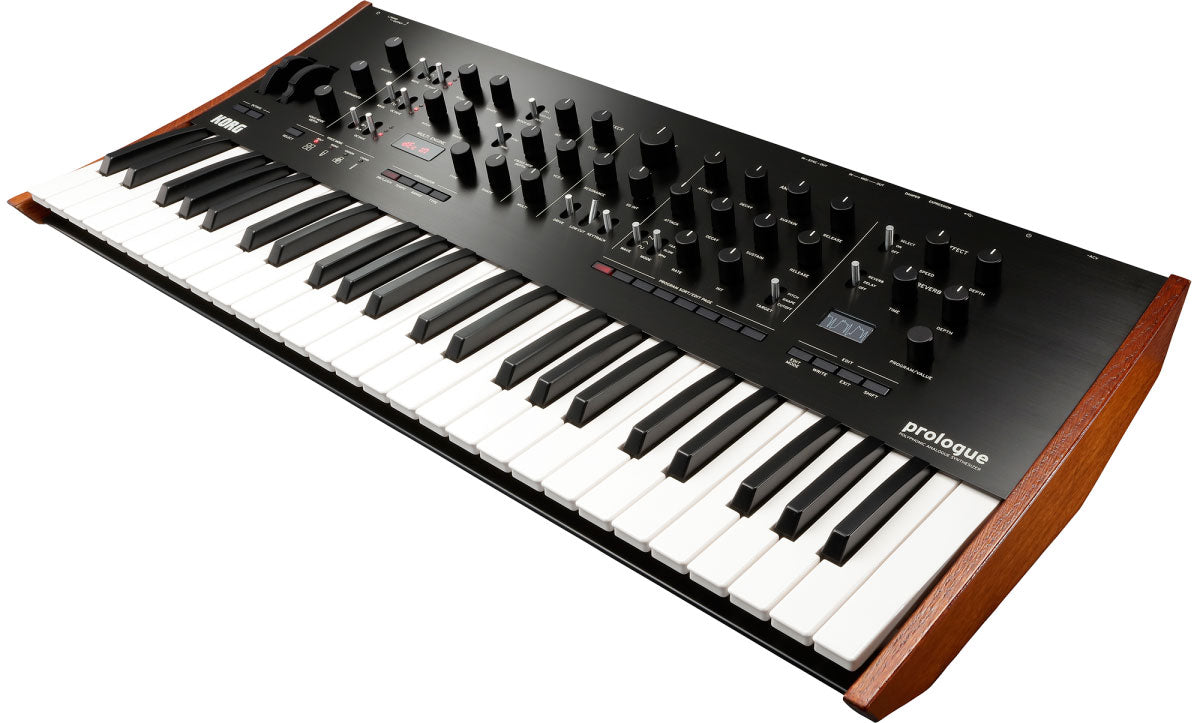
Otherwise, both synthesizers feature a keyboard with Natural Touch technology, high quality and made in Japan, which offers a very comfortable and natural playing feel, also enhanced by the full size of their keys. At the same time, the Prologue range incorporates a revamped engine that provides three types of sound generators. Each voice features two analog oscillators (VCO1 and VCO2) plus one multi-digital oscillator (VCO3) that provides FM synthesis plus wavetable synthesis (Noise, VPM, User) and can be combined with the analog VCOs to further expand the instruments' potential. Prologue features four different voice modes: Poly (polyphonic synthesizer), Mono (mono synthesizer with sub-oscillator ideal for bass), Unison (all voices at the same time), and Chord (plays chords by just touching one key). It also includes an arpeggiator, a dual effects section, and 500 program locations to save your sound creations. The filter has also been updated, which now features a dedicated drive circuit to add harmonic richness. Without leaving the synthesis section, we bring you the limited edition of the Korg ARP Odyssey FSQ, a special set that includes the Korg ARP Odyssey FS duophonic synthesizer –the successful and meticulous reissue of the legendary original model– and the KORG SQ-1 step sequencer.
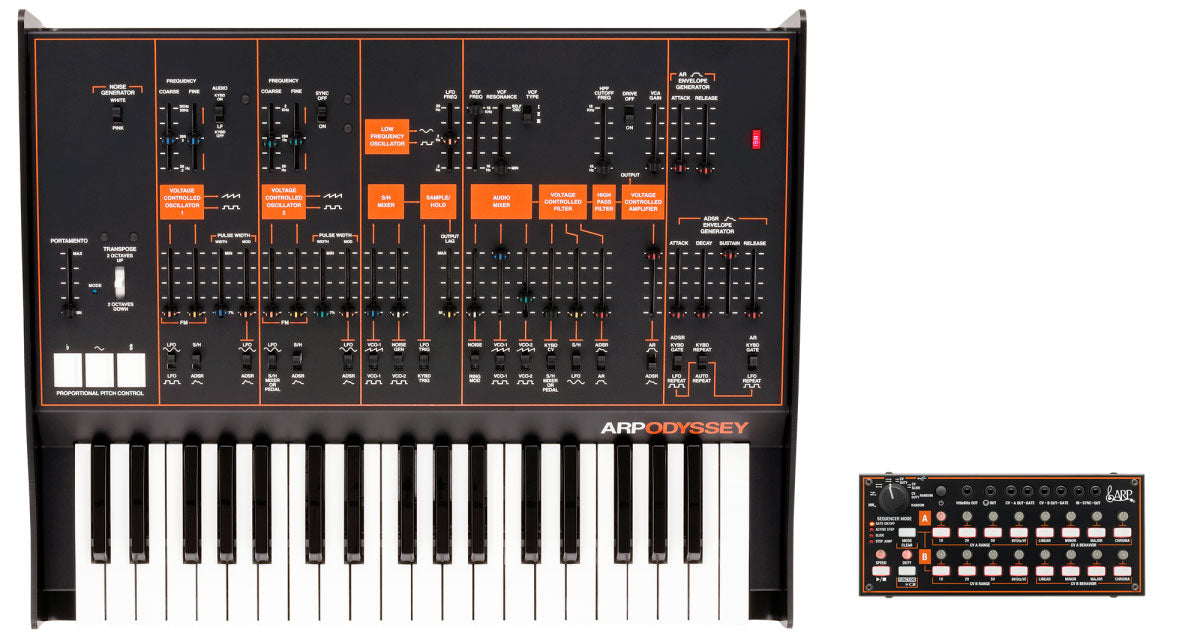
This instrument, recognized for its incisive sound and, at the same time, for its rich range of timbral possibilities –has been used in all types of musical styles–, faithfully reproduces the analog technology of the legendary 70s synthesizer based on a complete replica of the original ARP Odyssey circuitry. In addition, it adds a series of necessary updates to be able to integrate into current production environments, such as the headphone output and its USB Type B port to connect it to a computer. Korg ARP Odyssey FS offers 37 notes (full-size key, no velocity sensitivity and no aftertouch- like the original), 2 voices of polyphony, noise generator (white and pink), Portamento speed control, Two VCOs with sawtooth, square, and dynamic (with PWM) waveforms, low-pass filter (resonant): 12 and 24dB / octave; frequency range: 16Hz-16kHz, voltage-controlled amplifier (VCA), Ring Modulator (digital), ADSR and AR envelope generators, TS 1/4" and XLR audio output, MIDI input port (DIN), USB (Type B). Likewise, it incorporates CV, GATE, and TRIG connections, which allow you to send or receive analog signals to control the instrument. As for the KORG SQ-1 step sequencer, this is a modern version of the famous SQ-10. It provides a 2 x 8 step sequencer with quarter, eighth, and sixteenth note sequence step resolutions, editing buttons that offer excellent improvisation possibilities, and a great selection of I/O. The flexibility of the SQ-1 allows you to control everything from vintage analog synthesizers, like the Odyssey, to the new compact synthesizers. Another very interesting presentation is the “drum machine” Korg KR-55 Pro, a multi-function drum machine that offers an arsenal of tools aimed at the creation of rhythmic bases –although the device does not stop there–.
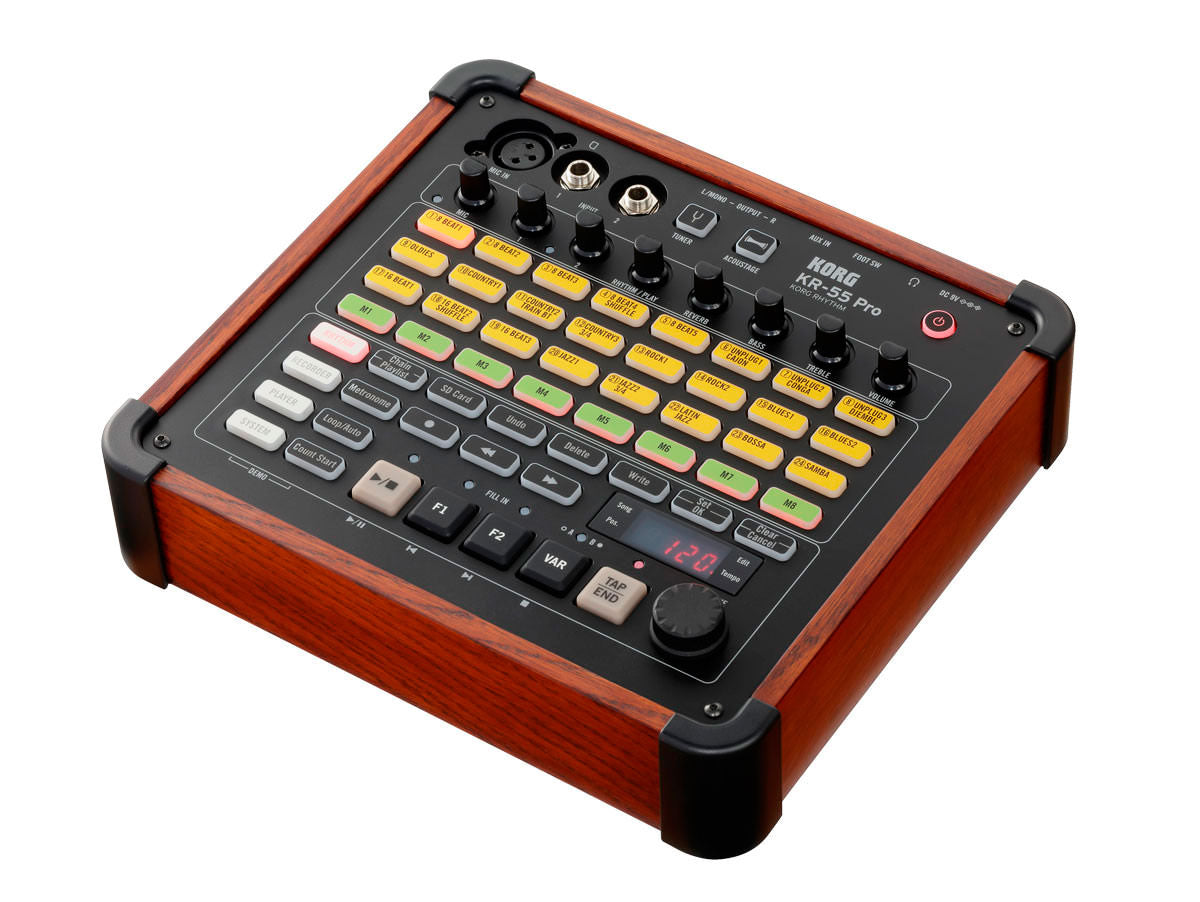
If we examine the product in detail, we see that, in addition to providing 24 built-in drum/percussion rhythmic styles –recorded live using Korg's exclusive "Real Groove Technology"–, the KR-55 Pro also works as a powerful mixer/recorder/player. As if all this were not enough, it also adds an effects mixer section, a tuner function, a 7-segment LED display, an SD card, and, to further enhance its portability and autonomy, the option to be powered by batteries. In summary, Korg KR-55 Pro comes equipped with 24 rhythm styles –with two variations for each style and a tempo ranging from 48 to 240 bpm–, recorder function with a 44.1 kHz and 16-bit resolution WAV audio PCM format, player function for a total of 99 songs –the maximum data size and recording time depend on the SD card–, a reverb and equalization effect section, a chromatic-type tuner, microphone, instrument, auxiliary inputs and a line master output and a headphone output. In short, a multi-function drum machine ideal for any musical context. We continue with Korg to now talk about the new Korg D1, a digital piano that aims to put in your hands the feeling of playing a real acoustic piano but through a compact, portable, and versatile instrument that, by not having speakers, gives you the possibility to practice anytime and anywhere.
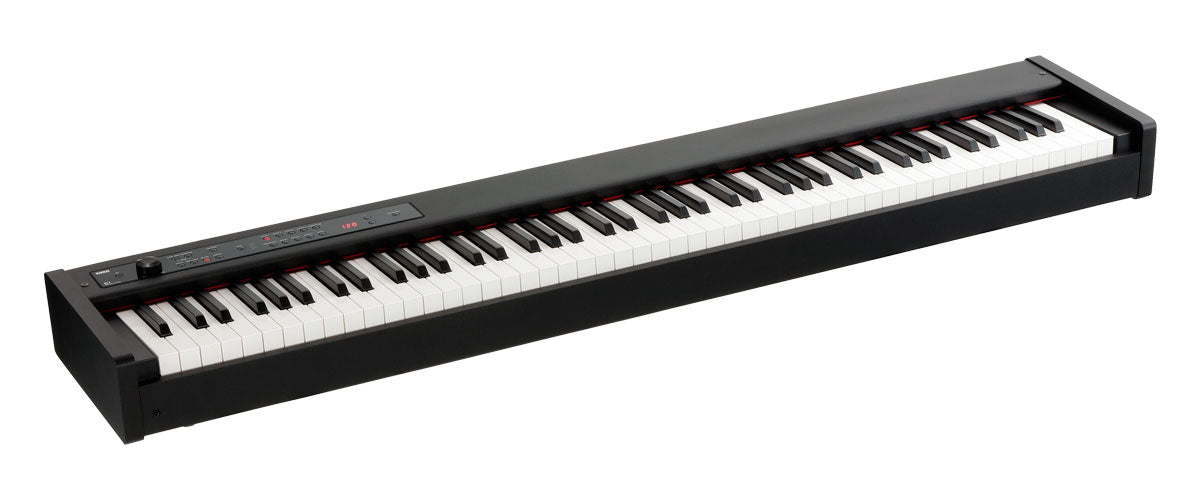
So that you can play it without noticing differences from a real piano, the Korg D1 incorporates a high-performance 88-note RH3 keyboard (A0–C8) –made in Japan– and 30 high-quality sounds –among which very convincing piano sounds–. In addition, this robust digital piano offers 120 voices of polyphony, Brilliance, Reverb, and Chorus effects, 30 Demo songs, a metronome, and includes a music stand and a Damper pedal. To close this first part, in which we have presented the most interesting products from Korg at this NAMM 2018, we will summarize the particularities of a different mixer. It is the Korg Volca Mix, an analog mixer that joins the rest of the components of the Korg Volca series. In this way, you already have all the necessary elements to configure an exclusive ecosystem capable of maximizing your live performances, playing sequences simultaneously on multiple synchronized units.
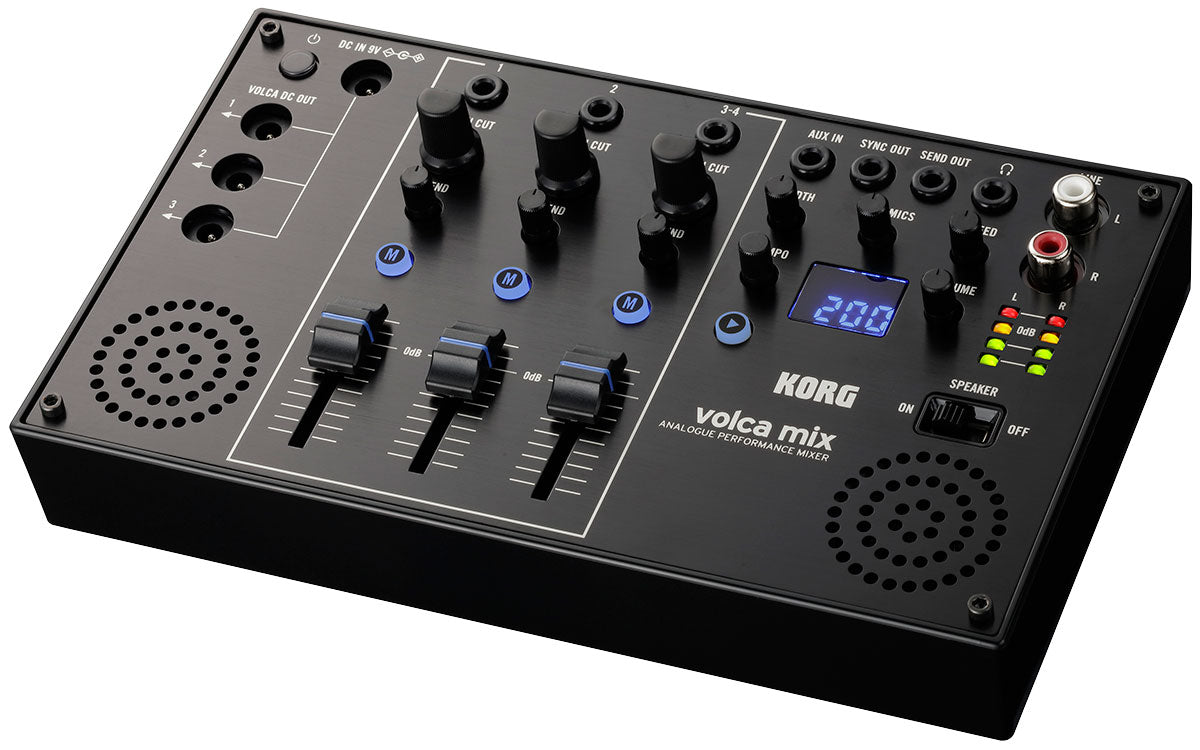
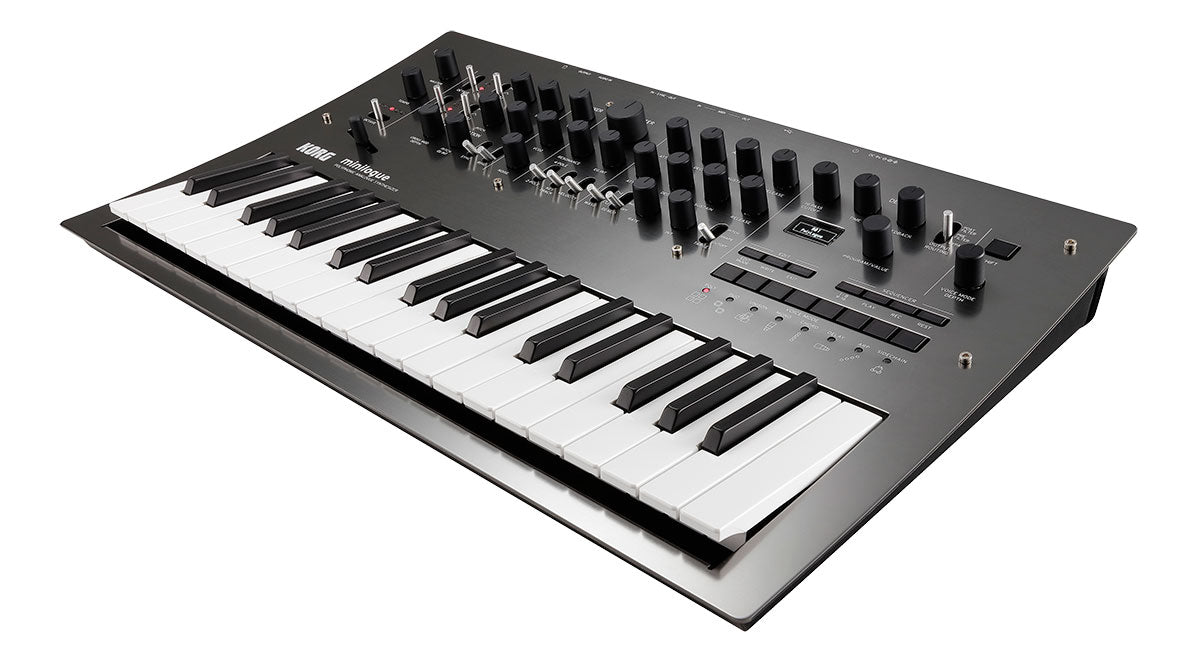
You can, for example, integrate in the same setup a polyphonic analog synthesizer, a step drum machine, and a bass synthesizer with a sequencer and manage it all from the Volca Mix, the four-channel analog mixer with an intuitive interface and many connectivity functions that allow you to connect up to three Volca units. Korg Volca Mix comes equipped with master effects based on a fully analog circuit. The device provides two mono inputs and one stereo input –with a mini-jack. The channels use vertical volume faders that provide very precise control and, in addition, have a Mute button and LO/HI CUT filters. Likewise, Volca Mix integrates an Expander to transform mono sources into stereo images, a dynamic range compressor that acts on the treble spectrum according to changes in the bass level, and a ‘side chain’ effect. On the other hand, to further enhance its excellent portability, it incorporates stereo speakers that are located on both sides of the front panel. And to finish, we want to mention the launch of the Korg Minilogue PG Limited Edition which, as its name indicates, is a special limited edition of the award-winning Korg Minilogue, a fully programmable polyphonic analog synthesizer with a 37-key slim keyboard and 16-step sequencer. This limited version comes with an exclusive polished gray finish that reflects, in a very attractive way, the different lighting, with nuances ranging from silver to dark gray or black.
Roland
Another of the giants of the industry, the prestigious Japanese manufacturer of musical instruments and sound electronic equipment, Roland, has also done its homework for this great event and, as usual, has once again lived up to the expectations it always generates in this type of event. Over the years, through its good work, Roland has become synonymous with many things, among them, electronic drums. On this occasion, the Japanese company brings us two excellent news for this product family. Specifically, two fantastic additions to your acoustic drum setup: Roland TM-6 Pro, a drum module with 500 new sounds sampled with the highest quality, and the Roland RT-MicS, a compact device that converts the snare and toms of your drum kit into digital pads–. Roland TM-6 Pro is a smart and intuitive drum sound trigger module that offers you instant and reliable access to 500 percussion sounds sampled with studio quality, providing you with a professional way to trigger sounds and complement your acoustic set on stage.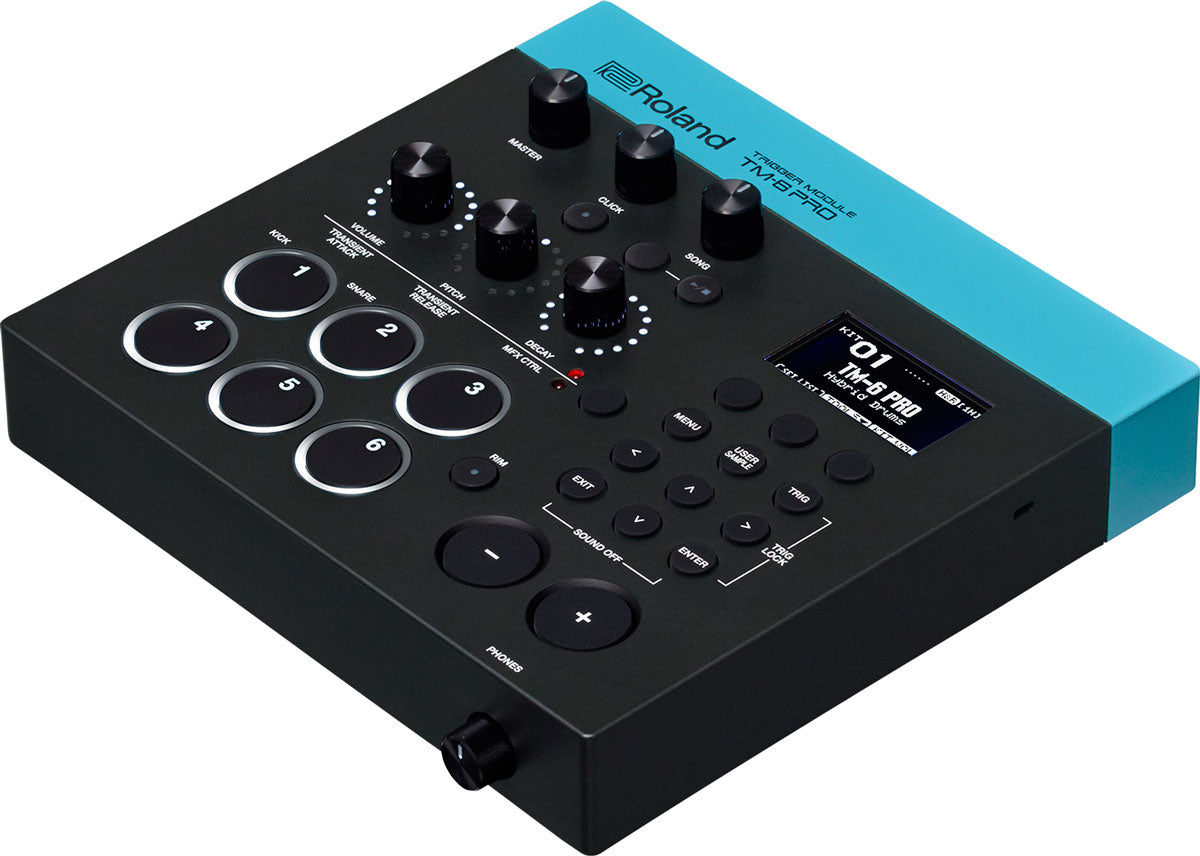
Its simple and fast operation, free from the depths of menus and submenus, and enhanced by the three Sound Modify dials on the front panel and the activity/value indicator LEDs, allows you to make quick and flexible edits, with direct control over the most common parameters, such as volume, pitch, decay, and tone adjustment in +/- 2 octaves. On the other hand, you can play back beat tracks or backing audio tracks directly from the SD card memory and store an entire song for a concert or to practice when you are not with the band. Roland TM-6 Pro also works as a trigger-to-MIDI converter with an 8-in x 8-out audio interface with USB connection and a sampling rate of up to 96 kHz. For its part, Roland RT-MicS consists of a simple and effective solution to set up a hybrid percussion set. This compact module integrates easily into your acoustic kit, without the need for any added accessories, and transforms, in a few seconds, the snare and toms of your drum kit into fabulous digital pads.
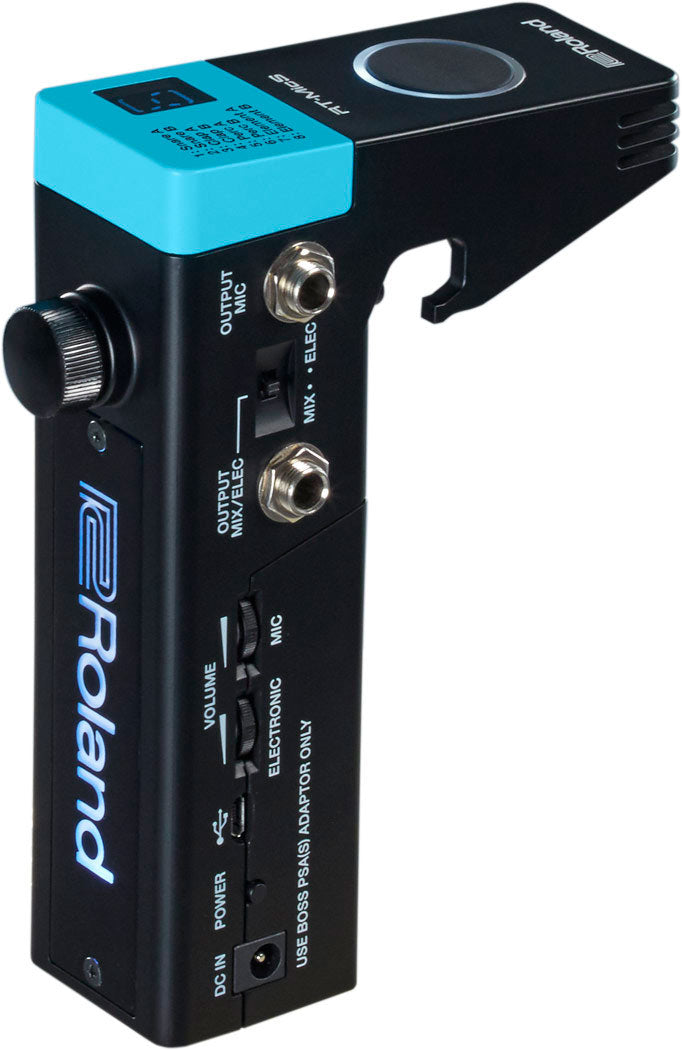
Roland RT-MicS comes with eight preset sounds so you can use them right away. However, if you prefer to complicate things, you can create unique and original sounds by layering sounds recorded with the built-in microphone –or imported from a computer via USB– or, also, by mixing the acoustic sound of the drums with an electronic sample. If you are thinking about playing on the street, you can do it, since this small system, which integrates a piezoelectric pickup and microphone, works with 9V batteries.
Focusrite
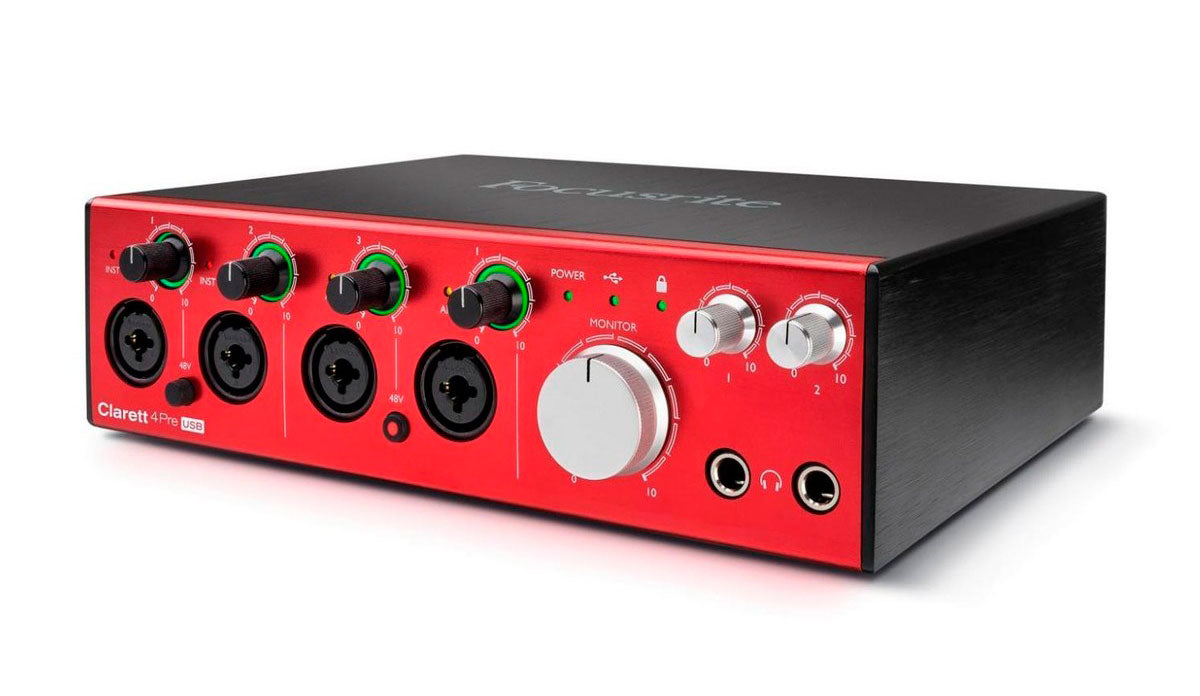
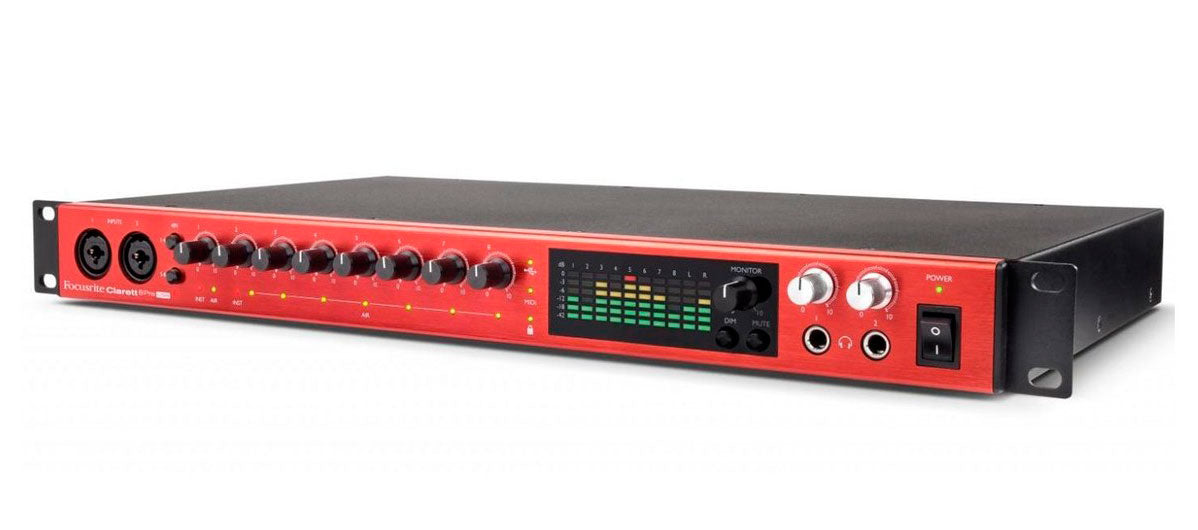
Next, we introduce ourselves to a new family of products, and we do it alongside a major reference in this sector, Focusrite. The renowned English manufacturer, a pioneer in the development and design of professional audio equipment, continues to be at the forefront of the market. For this reason, it could not miss this meeting. From this brand, we will highlight the brand-new series of audio interfaces Focusrite Clarett USB. With this new offering, Focusrite brings all the power, quality, and flexibility of the Clarett series –previously available only with a Thunderbolt connection– to users of other platforms with tighter budgets. The Clarett USB line consists of three models: Clarett 2Pre USB (10 inputs and 4 outputs), Clarett 4Pre USB (18 inputs and 8 outputs) and Clarett 8Pre USB (18 inputs and 20 outputs). All the interfaces in the series include high-performance microphone preamps with a low noise level (-128dB EIN) that offer an ultra-linear, low-distortion design to guarantee a clean, open, transparent sound that respects the original signal.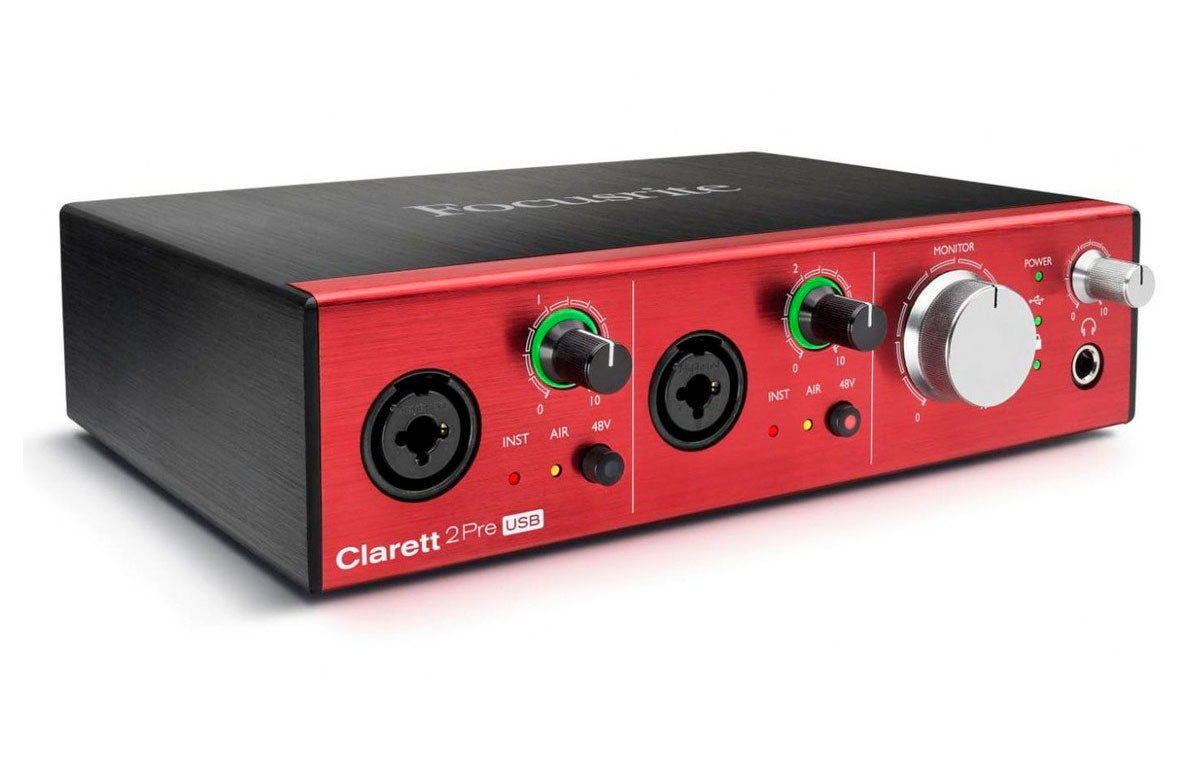
Universal Audio
We are not leaving the audio interfaces because we have to highlight another important novelty that comes from Universal Audio. It is the audio interface Arrow, the most affordable system to introduce you to the exceptional universe of Universal Audio.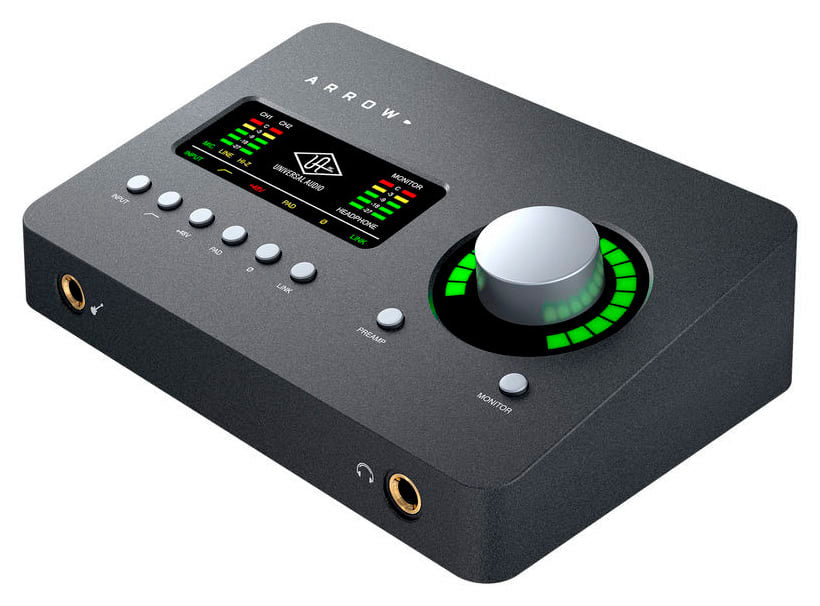
- First-class AD/DA converters.
- Integrated DSP accelerator for managing UAD real-time processing plug-ins.
- System capability to be expanded by adding UAD accelerators for greater processing power.
- Unison technology for the perfect emulation of impedances, amplification stages, circuit behavior at the component level, and ideal pickup points of the most prestigious microphone preamplifiers in the world.
Moog Music
And since we are talking about classics and great legacies, we take the opportunity to highlight the latest addition to the Moog semi-modular family, the Moog DFAM.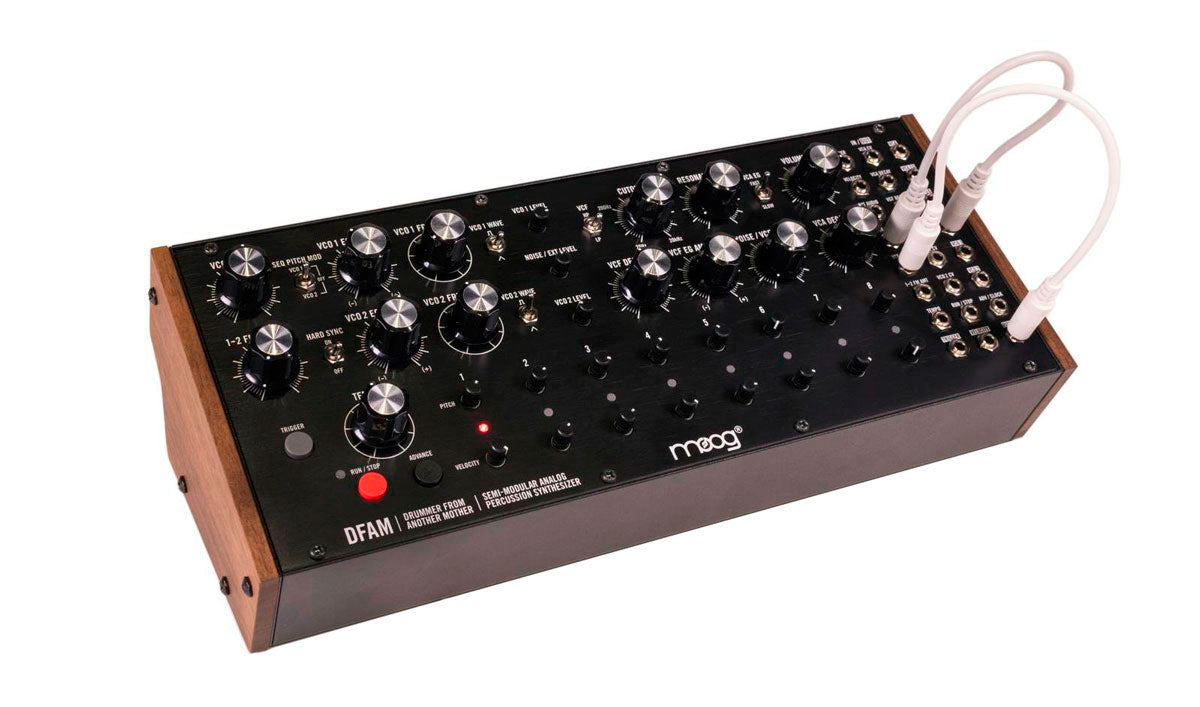
Pioneer DJ
Pioneer DJ is another regular at the annual NAMM show. On this occasion, we are going to highlight a product that suggests a renewal in its range of DJ controllers since, finally, Pioneer DJ faces its own line of controllers for its DJ software, Rekordbox. In this way, it begins to move away from the popular DDJ-R line, which was designed based on the DDJ-S series created, in turn, to work with Serato DJ.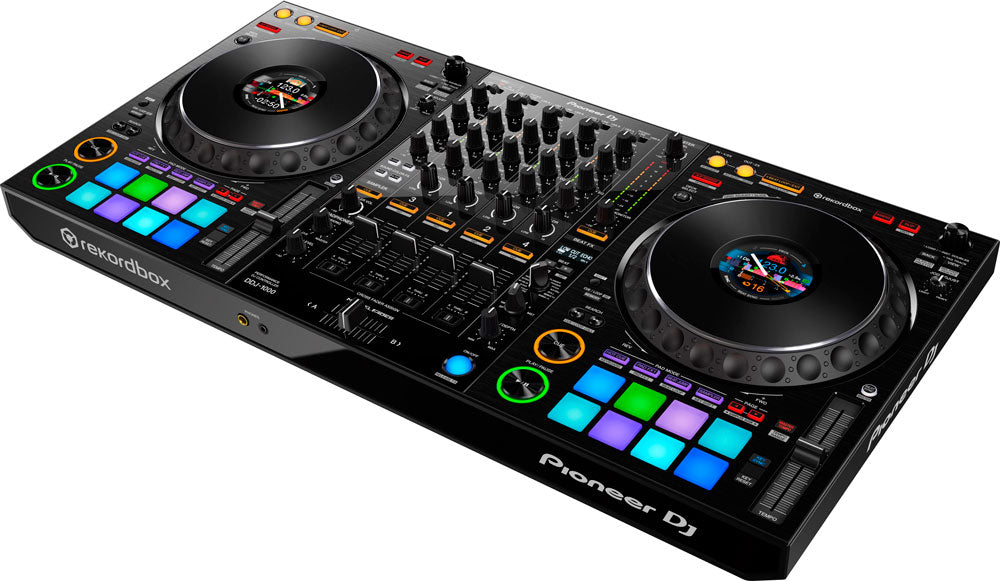
Pioneer DJ has just presented the Pioneer DDJ-1000 system, a new controller for its Rekordbox DJ software that features a 4-channel mixing section, larger jog wheels with a high-definition LCD screen, updated effects, a new Magvel crossfader –even more durable, if that's possible– and all the necessary tools to get the most out of the new improved Rekordbox DJ features. Some of the most notable points of this new product are, without a doubt, the new durable aluminum jog wheels, larger (202 mm), low latency, optimized for a perfect scratch response and with adjustable sensitivity –Jog Feeling Adjust–. Now they offer a more precise response, something that users had been demanding for a long time since, compared to the jogwheels of the CDJs, the control wheels of the DDJ offered a very light touch, with lower rotation resistance. Another of the interesting aspects of the brand-new Pioneer DDJ-1000 are the customizable color LCD screens, located in the center of each jog wheel, which provide you with information about the BPM, waveform, playback position, or Hot Cue and Loop points, greatly facilitating your work. The DDJ-1000 inherits 10 Beat FX from the DJM mixer series, but also includes four new additions: Enigma Jet, Mobius Saw, Mobius Triangle, and Low Cut Echo, which add to the four Sound Color FX of the DJM series mixing tables: Pitch, Filter, Dub Echo, and Noise. Likewise, it features 16 backlit pads to activate effects, Hot Cues, Beat Jump, Sampler, Keyboard Mode, Beat Loop, and Key Shift with a single touch. Another good news is that the system includes a dual USB port, in this way the controller can be shared between two DJs. All the channels of this new controller can be switched between USB A, USB B, and Line/Phono. Pioneer DJ DDJ-1000 includes a card with a license key for the Rekordbox DJ software.
Reloop
The German manufacturer of DJ equipment develops all its products keeping the needs of DJs in mind and always seeking to offer the best quality at an affordable price. On this occasion, it brings us a new 2-channel digital DJ mixer that combines a classic design with modern features such as the USB port, the integrated audio interface, and the effects.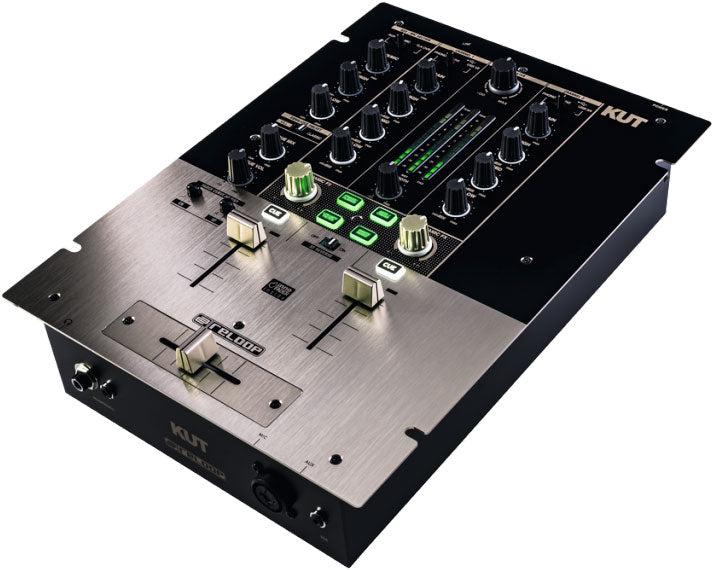
It is Reloop Kut, a new DJ mixer aimed at scratching devotees. It has a classic design, inspired by the legendary “battle mixers”, which are compact and robust mixers for scratching, with a simple and uncluttered design –that allows you to work efficiently–, generally two channels and with a crossfader designed for intensive use. In the case of Reloop Kut, this includes, indeed, two channels, with integrated FX and an InnoFader crossfader. It is equipped with a USB sound card (24 bits / 96kHz), which means it can also be used as a hardware mixer with DVS systems. At the same time, this USB port provides the possibility of recording the incoming signals from a turntable, CD player, or even the combined main output. On the other hand, the mixer also offers durable channel faders, very smooth and high quality, customizable curves for the crossfader and line-fader, crossfader inversion function, dynamic effects section with 7 combined effects, status LED, 3-band equalizer with selectable modes, and a black aluminum and metallic gold finish that repels dirt and gives it an attractive and professional look.
If you need more information about this or other promotions offered by Microfusa, do not hesitate to get in contact with our team, we will be happy to help you. MICROFUSA / BARCELONA STORE Sepúlveda, 134. Barcelona / Tel.: 934 553 695 MICROFUSA / MADRID STORE Campoamor, 17. Madrid / Tel.: 917 024 587 MICROFUSA / ONLINE STORE